What are the categories of alternative phrases, and when to use them?
Your sign-off isn’t a throwaway line. It’s the last impression you leave, and it quietly signals intent.
That’s why the same closing can land totally differently depending on the situation: cold outbound vs warm follow-up; founder vs procurement; fast-moving startup vs regulated enterprise; first email vs late-stage “we’re aligned” thread, and so on.
Below are the main categories that cover 95% of real-world use cases. Each one has a “when to use it” guideline along with a list of examples you can use for your outreach.
Energetic and enthusiastic alternatives
Use these when the conversation already has momentum. Demos that went well, a positive reply, a partnership thread where both sides are leaning in. The trick is to sound confident without sounding like a hype machine.
Use when: early-stage excitement, clear interest, collaborative tone
Avoid when: the prospect hasn’t shown interest yet (it can feel presumptive)
Examples:
- Eager to collaborate
- Excited to get started
- Looking forward to building this together
- Keen to kick this off
- Excited to move this forward
- Looking forward to getting momentum here
- Ready to get rolling
Dialogue-inviting alternatives
These are your highest-ROI closings for cold outreach and follow-ups. You’re not assuming anything, you’re making it easy to reply, and you’re pushing the thread forward without sounding pushy.
Use when: cold outreach, discovery, follow-ups, “sanity check” messages
Avoid when: the next step is already agreed and you just need a yes/no
Examples:
- Would love your thoughts
- Curious what you think
- Open to your feedback
- Happy to talk it through
- Does this direction make sense?
- Worth a quick chat?
- Any quick reaction?
- What would you change here?
Flexible and accommodating alternatives
Use these when there’s a real process to follow, not a quick yes/no decision. Enterprise deals, procurement, multiple stakeholders, internal projects with dependencies. You’re signaling professionalism and respect for how they operate.
Use when: enterprise, procurement, stakeholder-heavy decisions, scheduling friction
Avoid when: a simple “yes/no” would be better (don’t overcomplicate)
Examples:
- Open to your preferred next step
- Happy to align with your timeline
- We can adjust based on your priorities
- Available to sync when it works on your end
- Let me know what works best for your process
- We can take this in phases if helpful
- Happy to follow your lead here
Informal and friendly alternatives
These are great, but only when you’ve earned them. Use them with startups, internal teams, warm intros, or when the thread already has a casual tone. If you do this too early, it can feel slightly off.
Use when: rapport is established, startup culture, internal comms, warm LinkedIn
Avoid when: first-touch outreach to a formal buyer
Examples:
- Looking forward to teaming up
- Let’s make this happen
- Excited to work together
- Keen to dive in
- Appreciate it — talk soon
- Sounds good, speak soon
- Looking forward to it
Professional and formal alternatives
These are for conservative audiences: finance, legal, government, heavily regulated industries, or senior execs who prefer clean, formal language. The goal is straightforward professionalism, not personality.
Use when: formal orgs, exec comms, regulated industries
Avoid when: the thread is clearly casual (it can feel stiff)
Examples:
- I welcome the opportunity to work together
- Looking forward to a productive collaboration
- Thank you for your consideration
- Appreciate your time and attention
- Respectfully
- Thank you in advance
Collaborative and partnership-focused alternatives
Use these when it’s genuinely a two-way partnership. Joint initiatives, integrations, co-marketing, long-term contracts, strategic relationships. The point is shared outcomes, not sales in its traditional sense.
Use when: partnerships, alliances, long-term initiatives
Avoid when: you’re doing a straightforward transactional sale
Examples:
- Looking forward to achieving shared goals
- Ready to move this forward together
- Excited to collaborate closely
- Looking forward to partnering on this
- Looking forward to aligning on next steps
- Excited to build a strong working rhythm
- Looking forward to a long-term collaboration
Expertise-acknowledging alternatives
These are useful when you’re speaking to someone senior or highly specialized. The goal is to show respect without sounding like flattery. Keep it grounded in something real, be it their role, their experience, or the decision in front of them.
Use when: exec outreach, technical buyers, advisors, specialists
Avoid when: it’s a basic outbound email with no context
Examples:
- I’d value your input here
- Appreciate your perspective on this
- Keen to hear your recommendations
- Would love your take on this
- Looking forward to learning from your insight
- Interested in how you’d approach this
- Appreciate any guidance you can share
Brief and concise sign-offs
Best for late-stage threads, reminders, and high-volume sequences where the email itself is already short. The key is to stay polite while keeping it frictionless.
Use when: follow-ups, reminders, late-stage “just confirm” threads
Avoid when: you still need to establish trust or explain context
Examples:
- Thoughts?
- Ready when you are
- Happy to move ahead
- Let me know
- Quick yes/no is fine
These brief, concise sign-offs are effective when you want to be clear and efficient at the same time.
When you’re writing one email, picking the right sign-off is easy. When you’re reaching out to hundreds of people, it’s easy to fall back into generic closings.
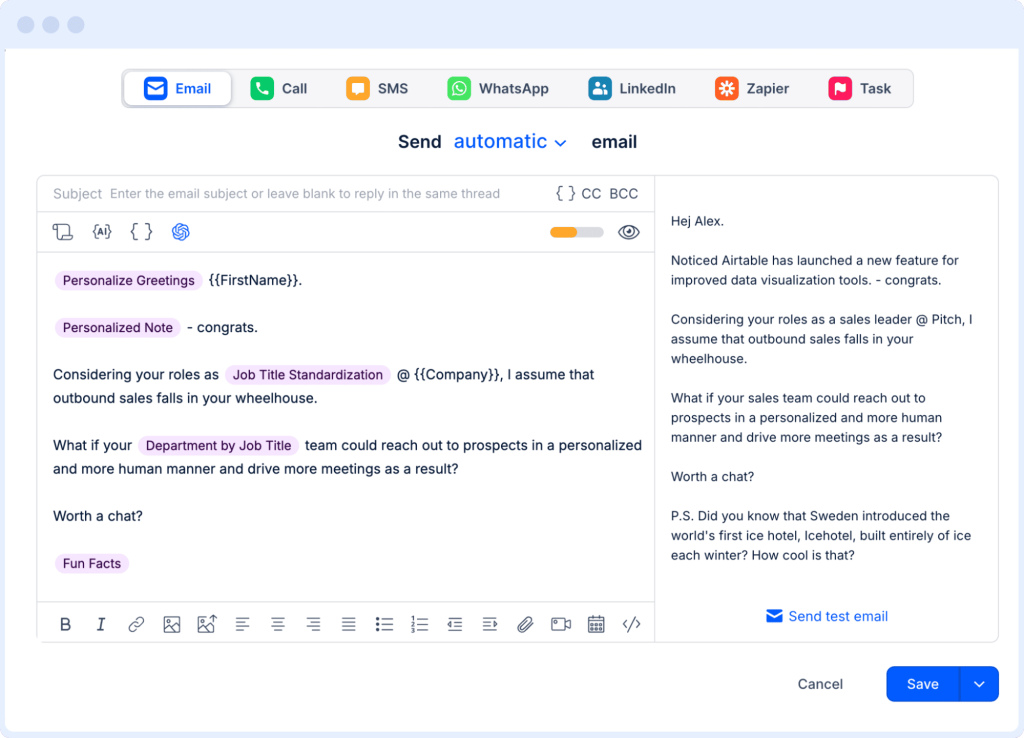
Reply.io helps you keep the sign-off contextual and personalized at scale, along with the rest of the email.
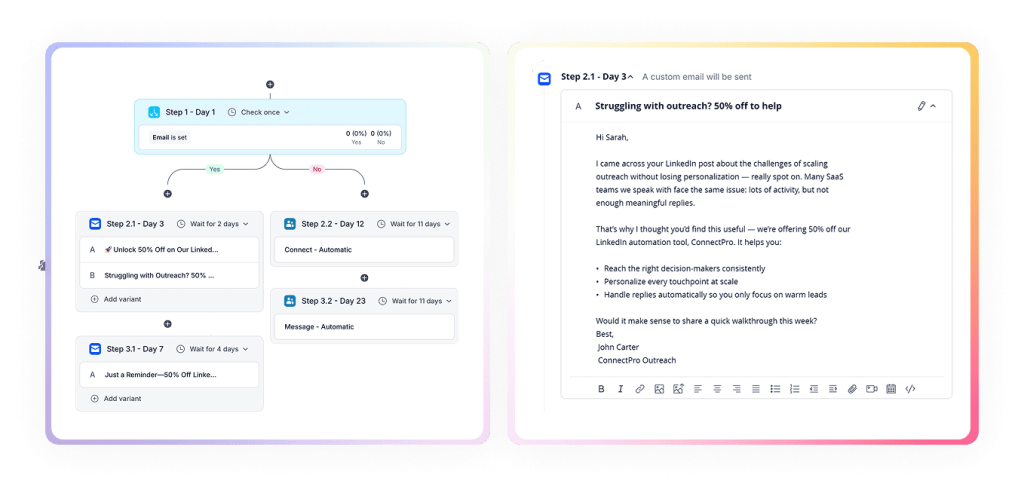
With its AI Variables feature, you can tailor closings based on role, stage, and engagement (cold prospect vs warm reply), then run it across multichannel sequences so the tone stays consistent whether the touchpoint is email or LinkedIn:
Each recipient will get a truly personalized email intro, main body, and ending, all based on AI-researched context from their LinkedIn, company websites, and more.
With its conditional logic, each sequence will adjust messaging, channel, and timing based on each recipient’s behavior in real time. So if your first email went unopened, Reply sends out an automated LinkedIn connection request; once accepted — Reply crafts a personalized LinkedIn message and cancels the scheduled email follow-up, and so on.