The psychology behind high-ticket sales
High-ticket sales aren’t just about selling expensive products or services; they’re about understanding human behavior at a deep level. When people invest thousands (or even tens of thousands) of dollars, they don’t make decisions lightly. Their buying process is emotional, psychological, and strategic all at once. So, if you want to succeed in high-ticket sales, you need to master the psychology behind it.
Let’s break it down.
1. People buy transformation, not just a product
No one spends $10,000 just for a thing. They spend it for a result. Whether it’s a luxury coaching program, an elite mastermind, or a premium service, they’re buying a transformation. They want to become wealthier, healthier, more confident, or more successful.
Your job? Sell the outcome, not just the offer. Paint the vision of what their life will look like after they buy.
2. The power of trust and authority
When the price tag is high, skepticism is even higher. Your prospects need to feel 100% confident that (a) you know what you’re talking about, and (b) you’ve successfully helped others before them.
How to build trust:
- Share powerful case studies and success stories.
- Show proof—testimonials, credentials, media features.
- Be insanely knowledgeable. The more confident and credible you sound, the easier it is for them to trust you.
3. Scarcity & urgency: why now, not later?
People procrastinate, especially on big investments. But in high-ticket sales, delayed decisions often turn into lost decisions. You need to create urgency—without being pushy.
How to do it right:
- Limited availability (“I only take 10 clients per quarter.”)
- Exclusive access (“This mastermind only opens once a year.”)
- Time-sensitive bonuses (“Enroll by Friday and get a 1:1 strategy session.”)
Urgency should feel natural, not forced. If your offer is genuinely valuable, it makes sense that spots would be limited.
4. Emotional justification, logical validation
Here’s the deal:
- People buy emotionally. They imagine their dream life, feel the excitement, and want the transformation.
- But they justify it logically. They need a rational reason to say “yes” (so they don’t feel guilty later).
How to use this:
- Appeal to emotions first: “Imagine waking up every day knowing you’re in control of your business, your income, and your future.”
- Then back it up with logic: “This program provides proven frameworks, expert mentorship, and a track record of success.”
5. Handling objections like a pro
In high-ticket sales, objections aren’t rejections. They’re just requests for reassurance.
Common objections:
❌ “It’s too expensive.” → ✅ “Let’s talk about the ROI. What’s it costing you to not take action?”
❌ “I need to think about it.” → ✅ “Totally get it! What specifically are you unsure about?”
❌ “I’m not sure this will work for me.” → ✅ “I’ve helped people in your exact situation. Here’s proof.”
Don’t fear objections—welcome them. It’s your chance to guide the prospect toward clarity.
6. The energy you bring matters
Confidence is contagious. If you believe in your offer with absolute certainty, your prospect will feel it. If you hesitate, they’ll sense that too.
Before every call, remind yourself:
- “I have something life-changing to offer.”
- “I am NOT convincing—I’m helping them make the right decision.”
- “They need me more than I need them.”
That shift in mindset changes everything.
High-ticket vs. low-ticket customers: What’s the difference?
Let’s talk about the two kinds of customers you’ll often encounter: high-ticket and low-ticket. Understanding the difference between them is key to tailoring your business strategies effectively.
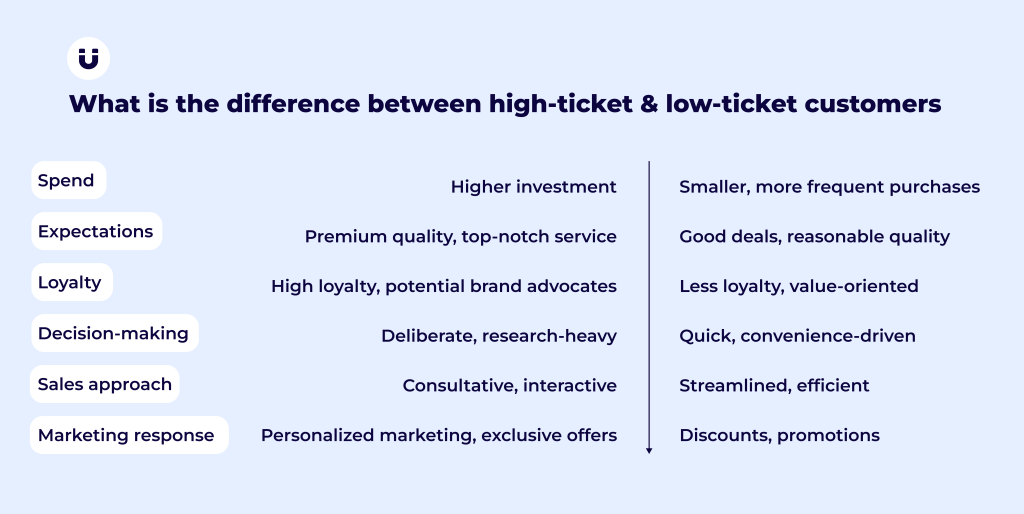
High-ticket customers are the folks who are willing to spend a significant amount of money on your products or services. Think of luxury car buyers, premium software subscribers, or high-end consultancy clients. Here’s what sets them apart:
- Higher spend → high-ticket customers are prepared to make large investments. They’re looking for premium quality and exceptional service.
- Expectations → they expect top-notch customer service, personalized experiences, and high value for their money.
- Loyalty → when satisfied, they tend to be loyal and may even become brand advocates, bringing in more high-ticket clients through referrals.
- Decision-making → their buying decisions often involve more deliberation, research, and interaction with your sales team.
On the other hand, low-ticket customers are those who go for more affordable options. Think everyday grocery shoppers, users of basic app versions, or clients of budget-friendly services. Here’s what characterizes them:
- Lower spend → these customers make smaller, more frequent purchases. They’re looking for good deals and reasonable quality.
- Expectations → they expect decent service and value, but they’re not looking for anything over-the-top.
- Volume → you’ll typically have more low-ticket customers, which can lead to steady revenue through volume sales.
- Decision-making → their buying decisions are quicker and based on convenience and cost-effectiveness.
Understanding the difference between high-ticket and low-ticket customers helps you tailor your approach effectively.
For instance, high-ticket customers might respond better to personalized marketing and exclusive offers, while low-ticket customers might be drawn to discounts and promotions. Providing exceptional, personalized service is crucial for high-ticket clients, whereas for low-ticket customers, efficient and friendly service goes a long way.
Your sales approach also needs to differ: high-ticket sales often require a consultative approach with more interaction and follow-up, whereas low-ticket sales benefit from the ease of access and streamlined purchasing processes.
High-ticket customers can boost your revenue significantly with fewer transactions, while low-ticket customers can provide a stable, consistent income stream.